Whenever a project combines two of your interests into a single idea, it becomes especially appealing. I’ve always been fascinated by machinery. First it was vehicles – pretty much anything that moved under its own power turned my head. I wanted to know how everything in the world worked, and complex machines seemed almost magical in the way they brought together so many moving pieces, working in synchrony to create something greater than the sum of its parts. I pored over aircraft cutaway infographics, learning the name of each part, and I got out of bed early to run to the window and watch the garbage truck do its rounds on my childhood street.
So it’s not surprising that I thought I wanted to become an aerospace engineer. That was before I discovered the most endlessly complex and magical machines that humans have created: computers. To be clear, I was no stranger to those either – Need for Speed (the original. yes, I’m old), the first racing game I remember playing, required archaic MS-DOS command-line incantations to get running on the family PC. Later, I found out you could rename 3D model files in NFS 2 so that you could drive around the track as a tree or a t-rex. No, the discovery I’m referring to is programming said computer. Not just swapping in a bigger hard drive or a faster video card, but taking control at the lowest level to bring any idea you could imagine to life on the screen. The first program I ever wrote was a text-based blackjack game on my TI-81. I took a programming course in high school where I made an Asteroids clone for the final project, and that was that. I would be a software engineer, no question.
This project combines my love of physical machines with digital ones.
The Cannonball
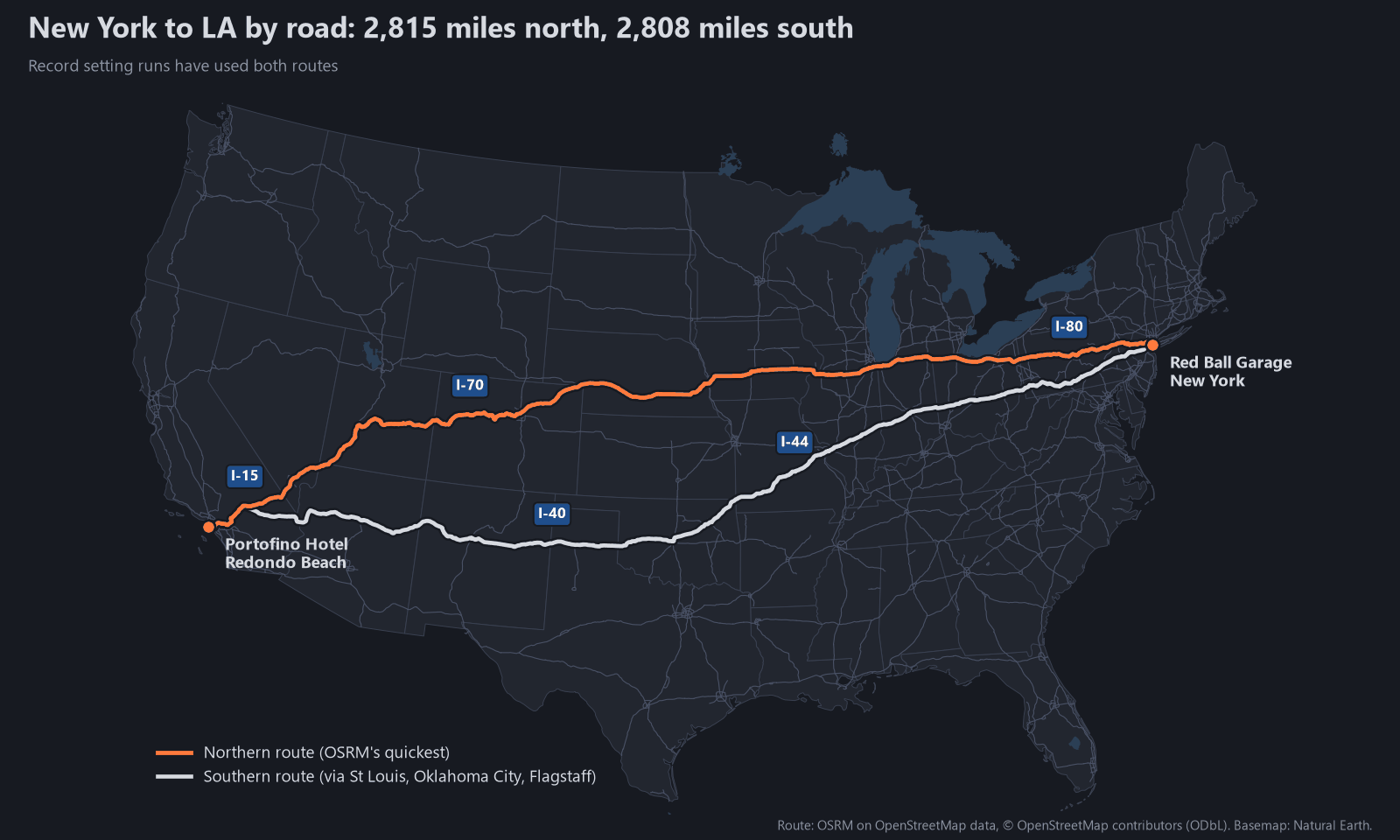
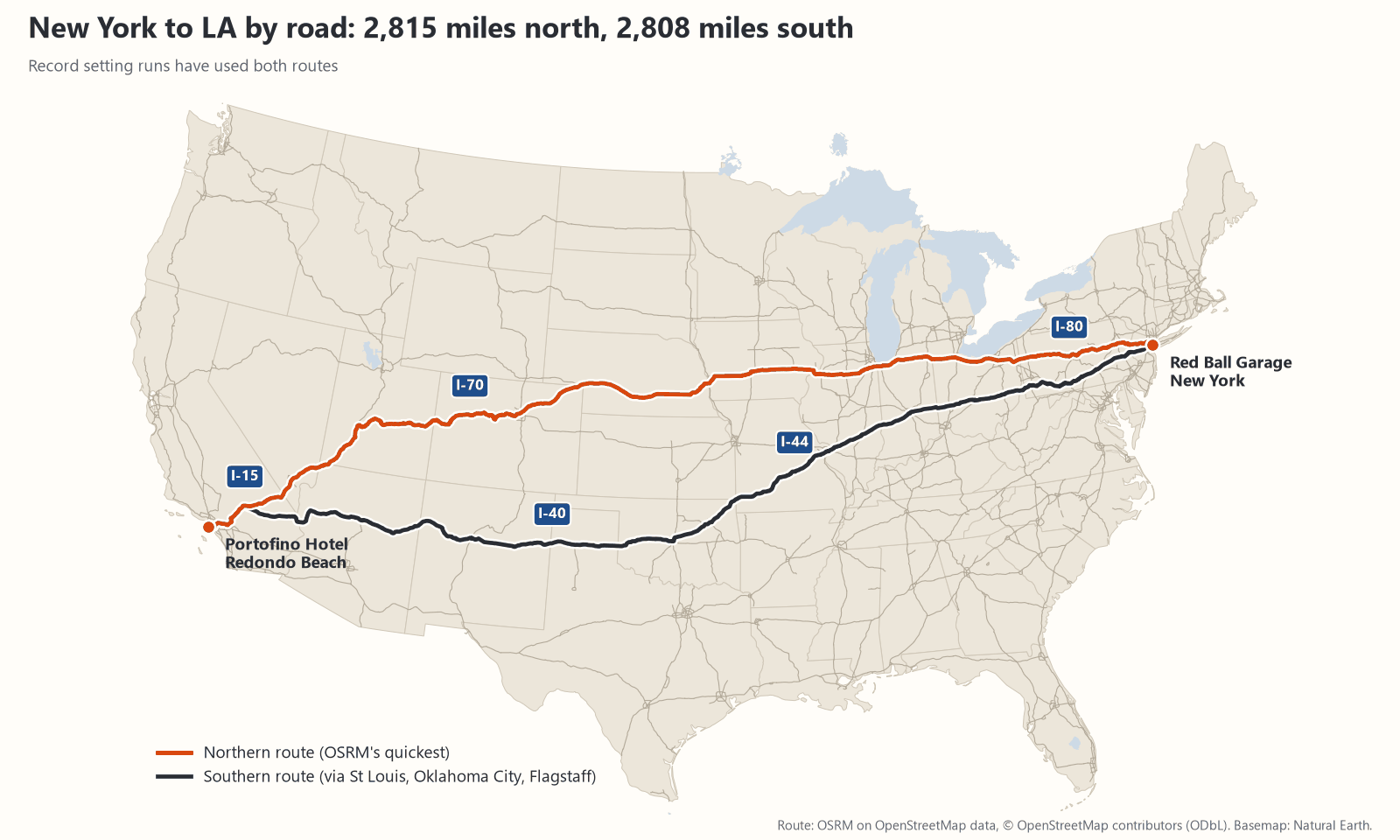 The usual route covers 2,815 miles. Driven at ordinary speeds, it takes around 50 hours; the record cuts that time in half. 1
The Cannonball is Need for Speed brought to life – exotic cars, high speeds, and dodging police. It’s an unofficial race with one simple goal: drive from New York to L.A. as fast as possible, on public roads, in traffic. It’s named after Erwin “Cannonball” Baker, who made the crossing in 53½ hours in 1933. In 1971, Car and Driver writer Brock Yates turned it into an outlaw race, the Cannonball Baker Sea-To-Shining-Sea Memorial Trophy Dash. It ran from the Red Ball Garage in Manhattan to the Portofino Hotel in Redondo Beach, partly to celebrate the new Interstates, and partly to protest the traffic laws coming with them. Yates and Dan Gurney won that year in a Ferrari Daytona. The race ran a handful of times until 1979 and inspired the 1981 Burt Reynolds film The Cannonball Run.
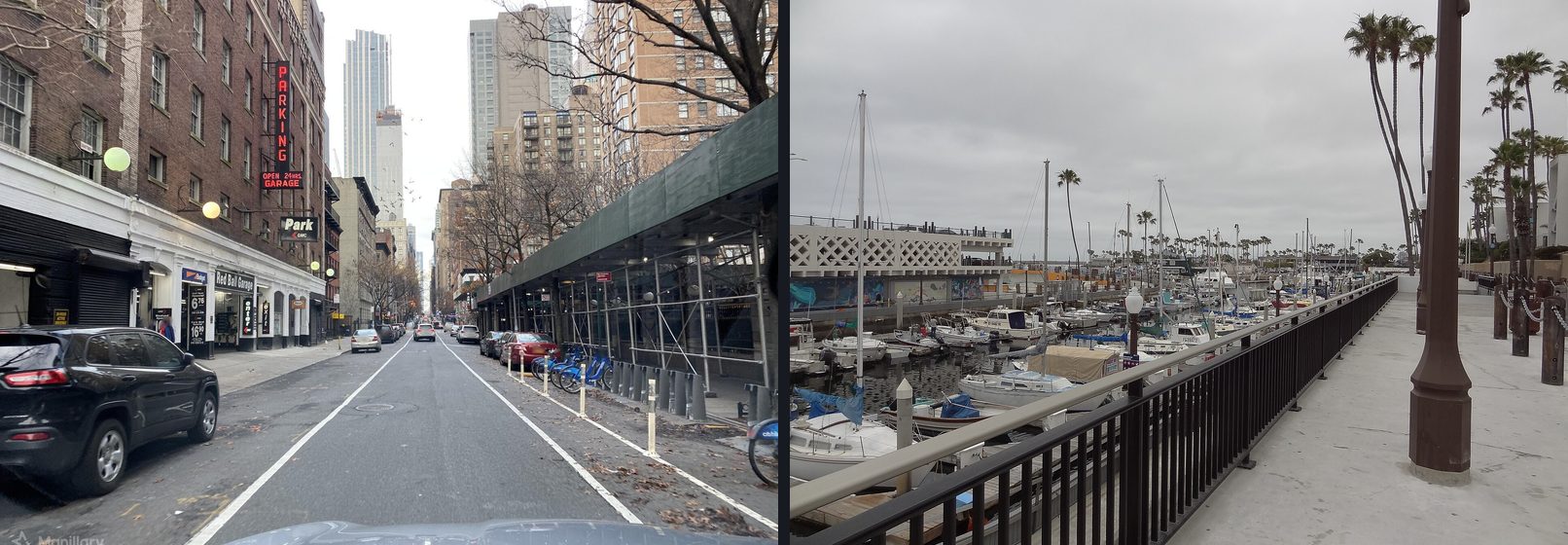
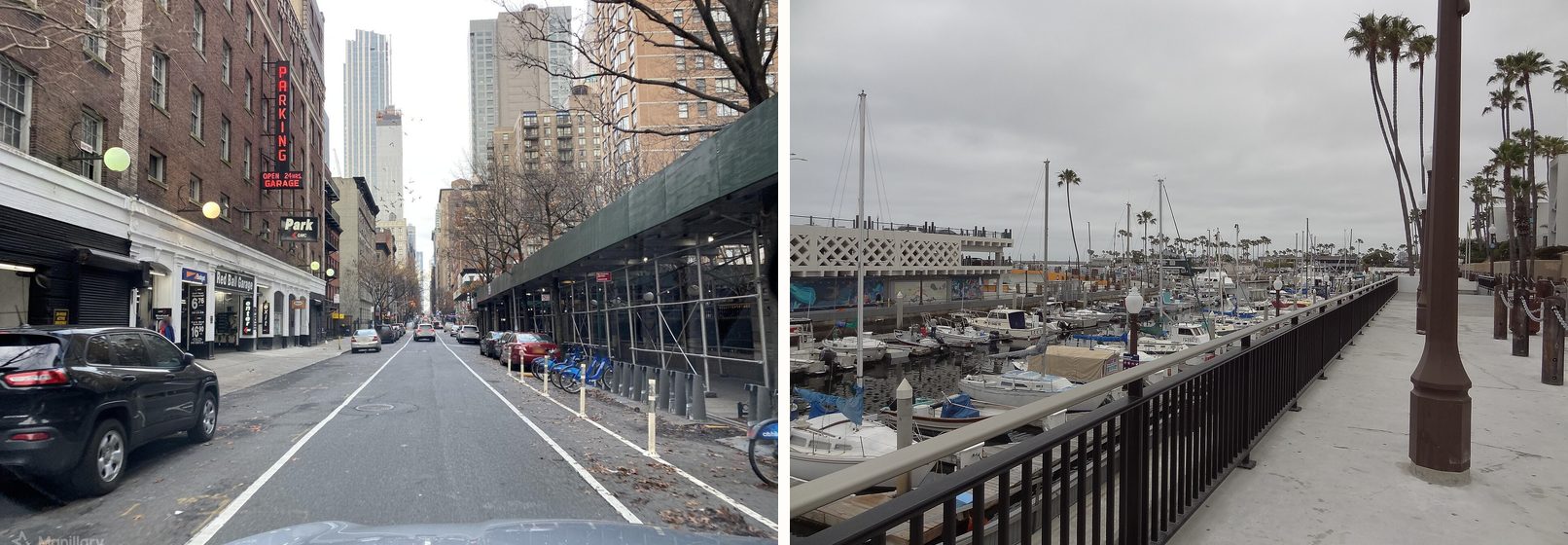 The Red Ball Garage on East 31st Street (left), and King Harbor, home of the Portofino Hotel (right). 2
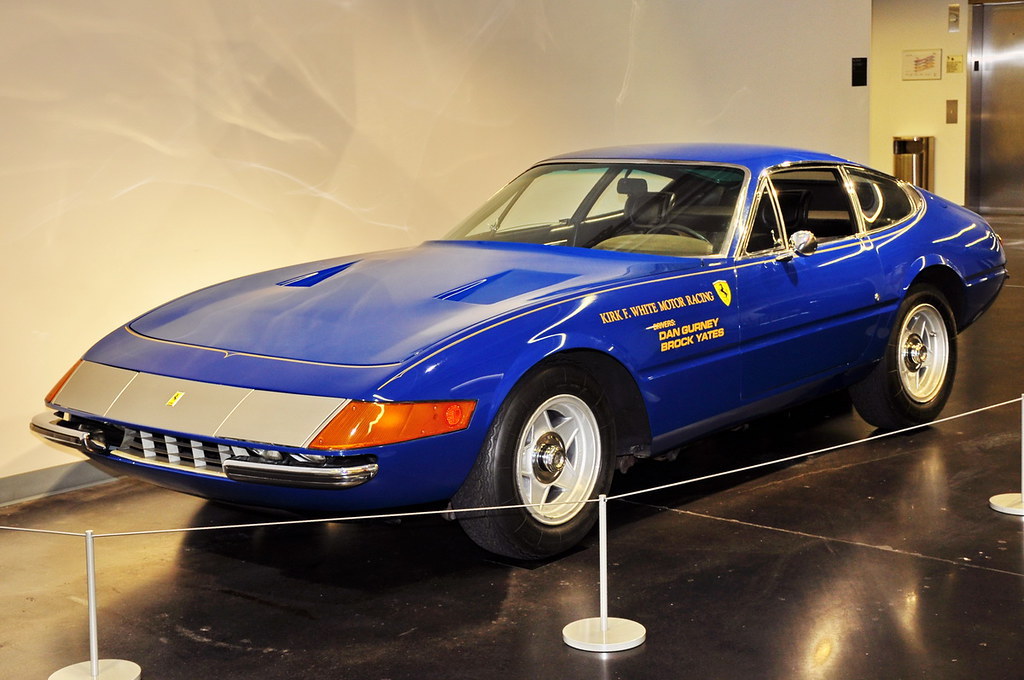 The 1971 winner itself: the Ferrari 365 GTB/4 Daytona that Dan Gurney and Brock Yates drove, still in its Kirk F. White Motor Racing lettering, on display in 2013. 3
In 1983, David Diem and Doug Turner won the “US Express” race in 32 hours 7 minutes, a record that stood for 23 years. Alex Roy and Dave Maher finally beat it in 2006 with 31 hours 4 minutes in a BMW M5 fitted with radar detectors, a police scanner, night vision and a 16-gallon fuel cell. Cory Welles filmed from the back seat, and the footage became 32 Hours 7 Minutes, a documentary tied up in legal trouble for years. It finally came out in 2019, expanded and re-cut, as APEX: The Secret Race Across America. The record fell again in 2013 and 2019. That documentary is what started my interest in the Cannonball race.
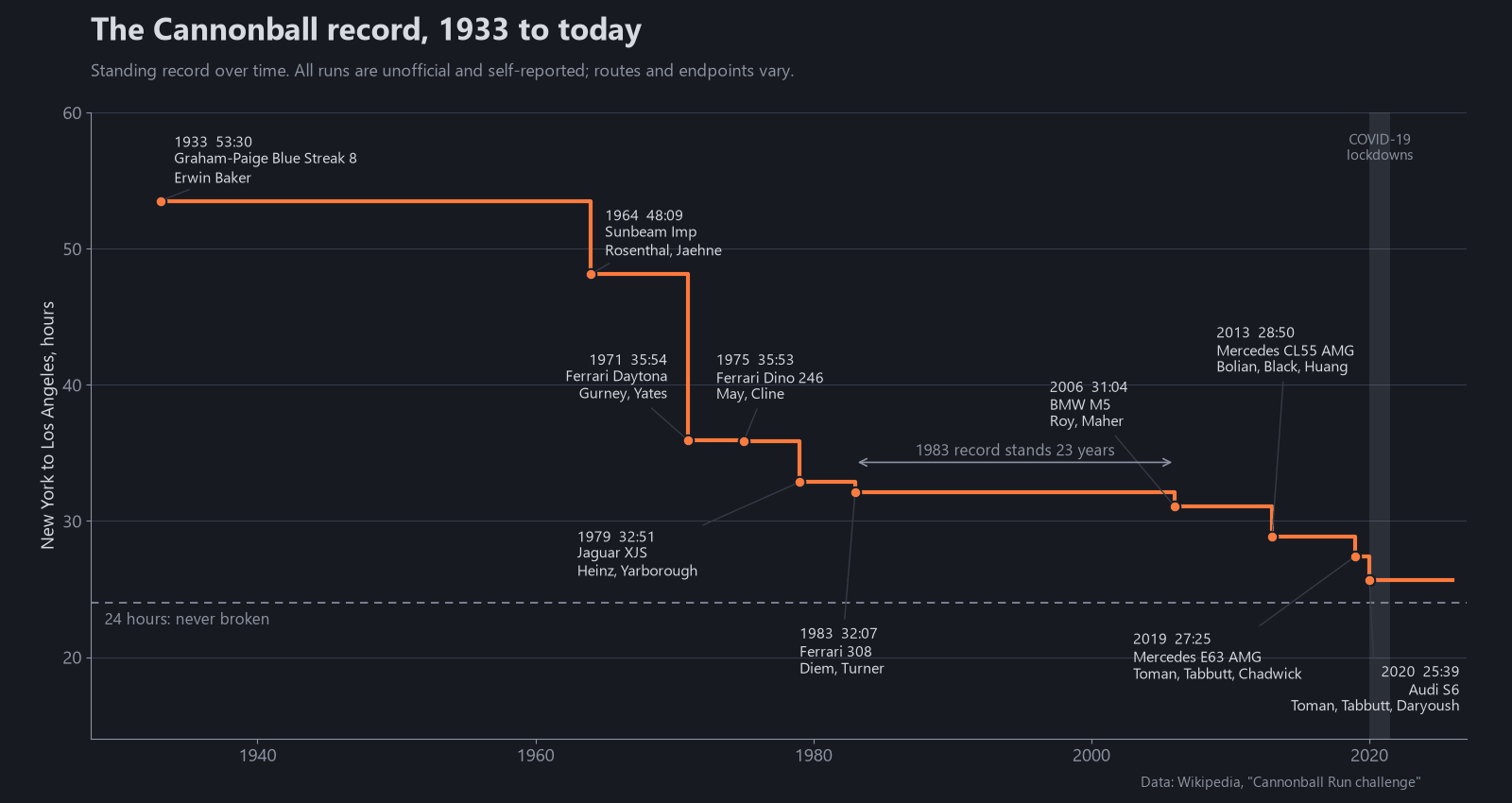
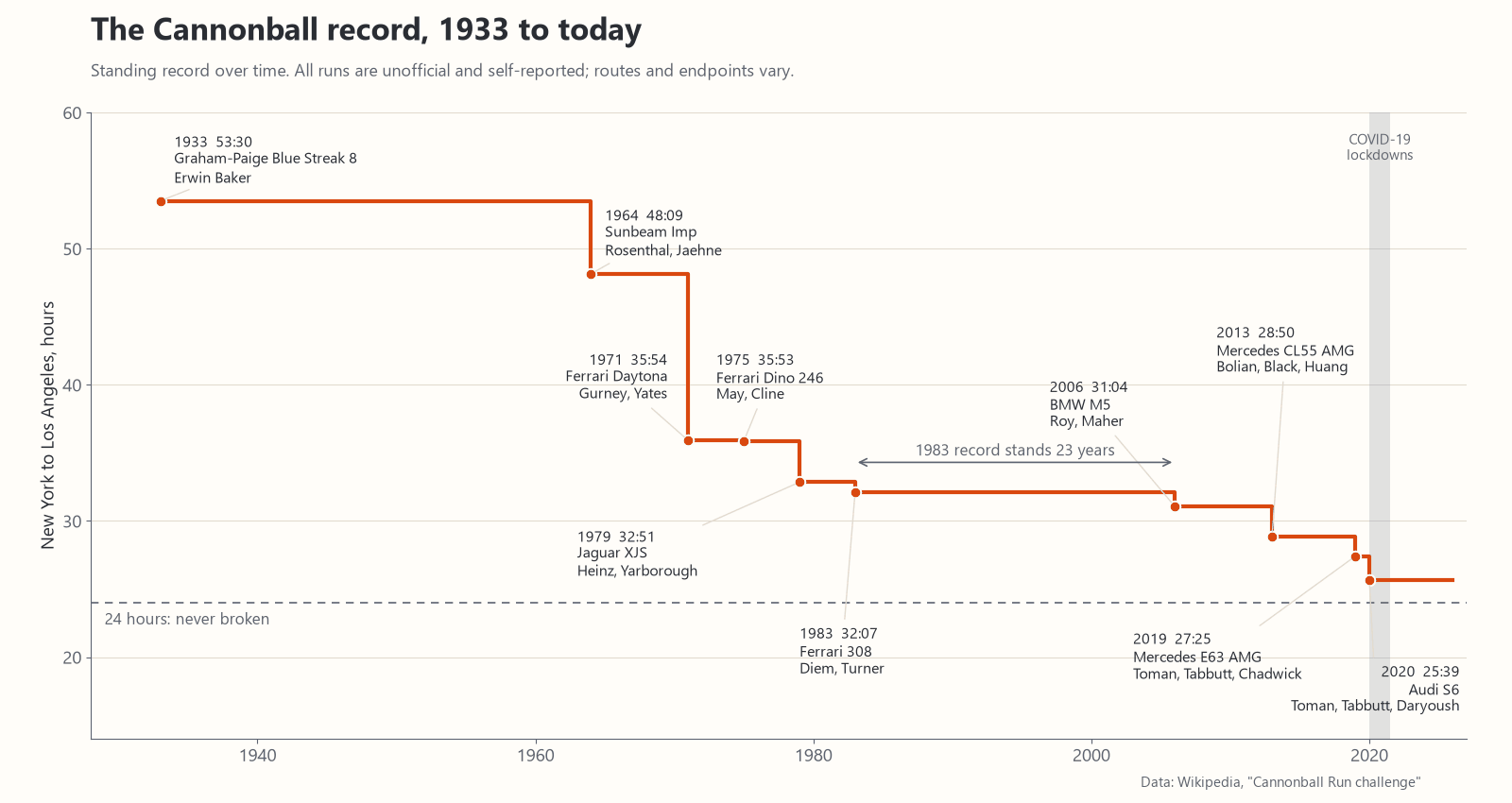 The standing record over time. All of these runs are unofficial and self-reported, and routes and endpoints vary. Times as listed on Wikipedia. 4
Over time, each attempt has become more of a complex, coordinated operation. Roy’s April 2006 try, which ended with a failed fuel pump in Oklahoma, had a pilot flying overhead in a Cessna as a police spotter. The 2019 team carried two radar detectors, a laser jammer, and an aircraft collision-avoidance system to pick up highway patrol planes. They had 18 friends along the route acting as lookouts, and ran Waze on an iPad and a phone. The 2020 car was an Audi S6 dressed to look like a Ford Taurus police interceptor, with spotters planned along the whole route.
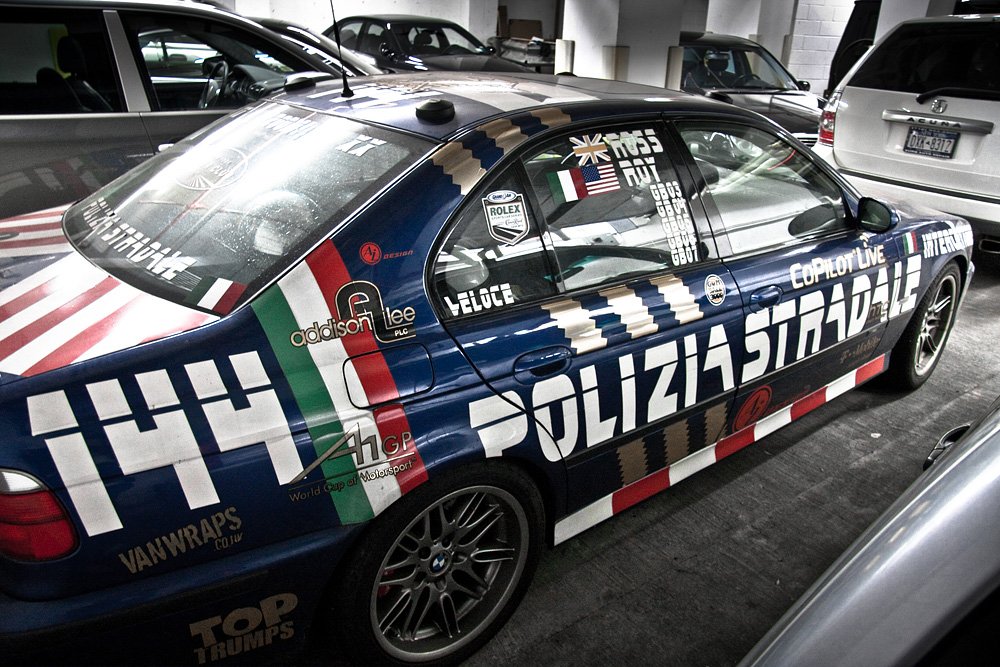 Alex Roy’s “Polizei 144” BMW M5, wearing 2007 Gumball 3000 rally decals. 5
Then came COVID-19. In spring 2020, lockdowns emptied the Interstates, and police in California reported a jump in drivers topping 100 mph on the quiet freeways. The Cannonball record fell several times during quarantine, ending at 25 hours 39 minutes in May 2020. Some argued those runs shouldn’t count, since empty roads were an unfair advantage. The record holders push back on that in their own write-up. Either way, those exceptional circumstances mean there’s a chance the current record may never be beaten. For this reason, records are sometimes sorted into categories, with “non-COVID” times apart from the lockdown runs.
The 2020 team tells the story of the 25:39 run on VINwiki: We set an UNBEATABLE Cannonball Record.
Assetto Corsa
I’ve thought for a while that it would be cool to be able to do the Cannonball in a video game. Not an arcade game, but a realistic driving simulation. However, the massive scale of a project like that kept me from considering it realistic to ever build. Some existing games are generally in that zone: American Truck Simulator does model a lot of US interstates, but it’s at 1:20 scale, and not a racing game. Microsoft Flight Simulator has a real-scale earth, but you can’t drive in it. Recently (October 2026), I saw a video for a BeamNG mod called BeamNG.Earth, which lets you drive around the entire world at real scale. Now that’s what I’m talking about. Seeing that video, combined with the work-multiplying possibilities of AI coding agents, is what inspired me to start this project.
I’ve dabbled in sim racing enough to have my own “rig” (steering wheel, seat, triple screens). I played iRacing for a few years, but I also really enjoyed Assetto Corsa (AC) for lower-stakes driving fun – track day servers at the Nürburgring, driving the highways of Tokyo with the Shutoko Revival Project, or through southern California with LA Canyons. Those last two are some of the largest tracks available in AC, but they’re dwarfed by the size of the Cannonball run.
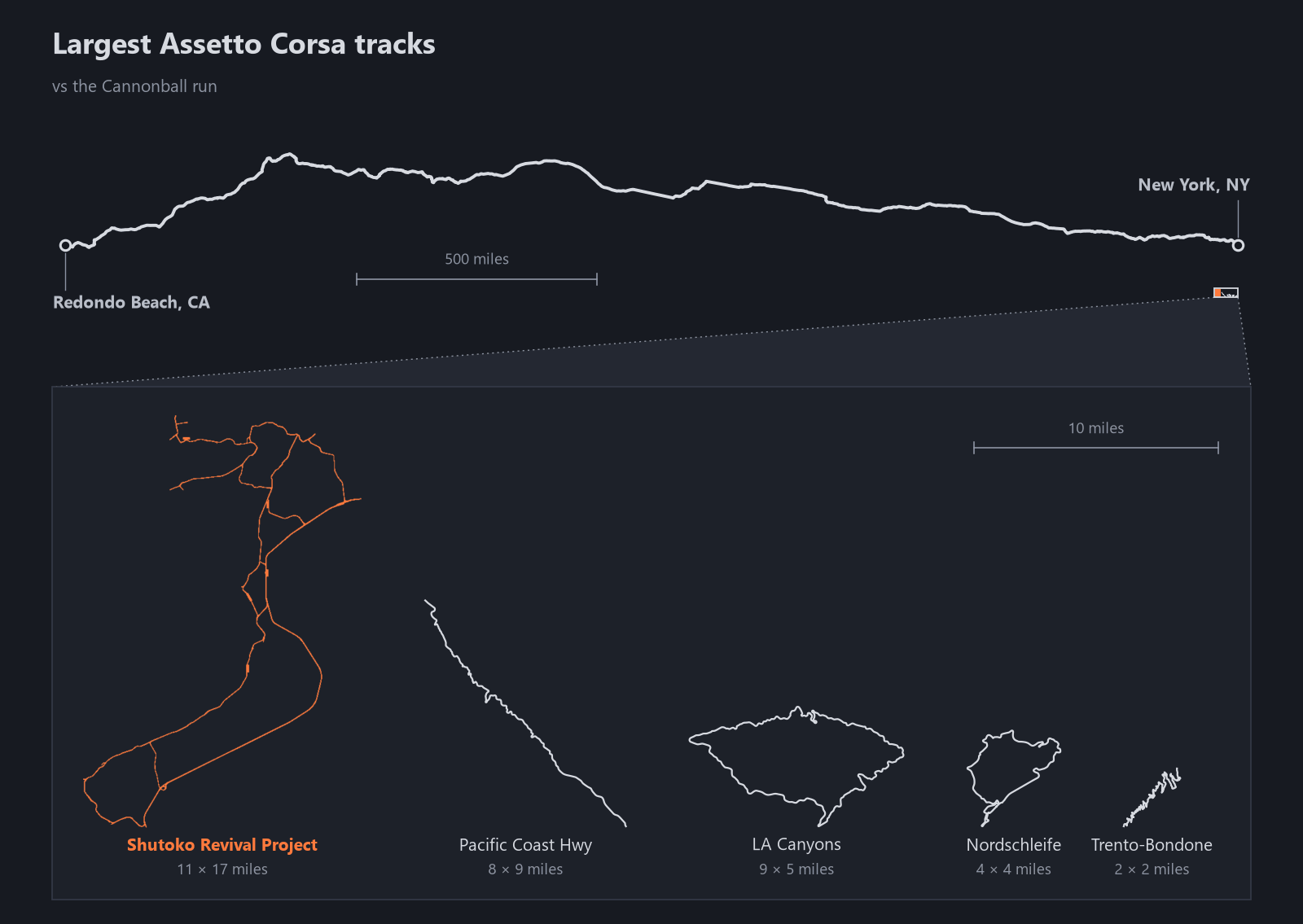
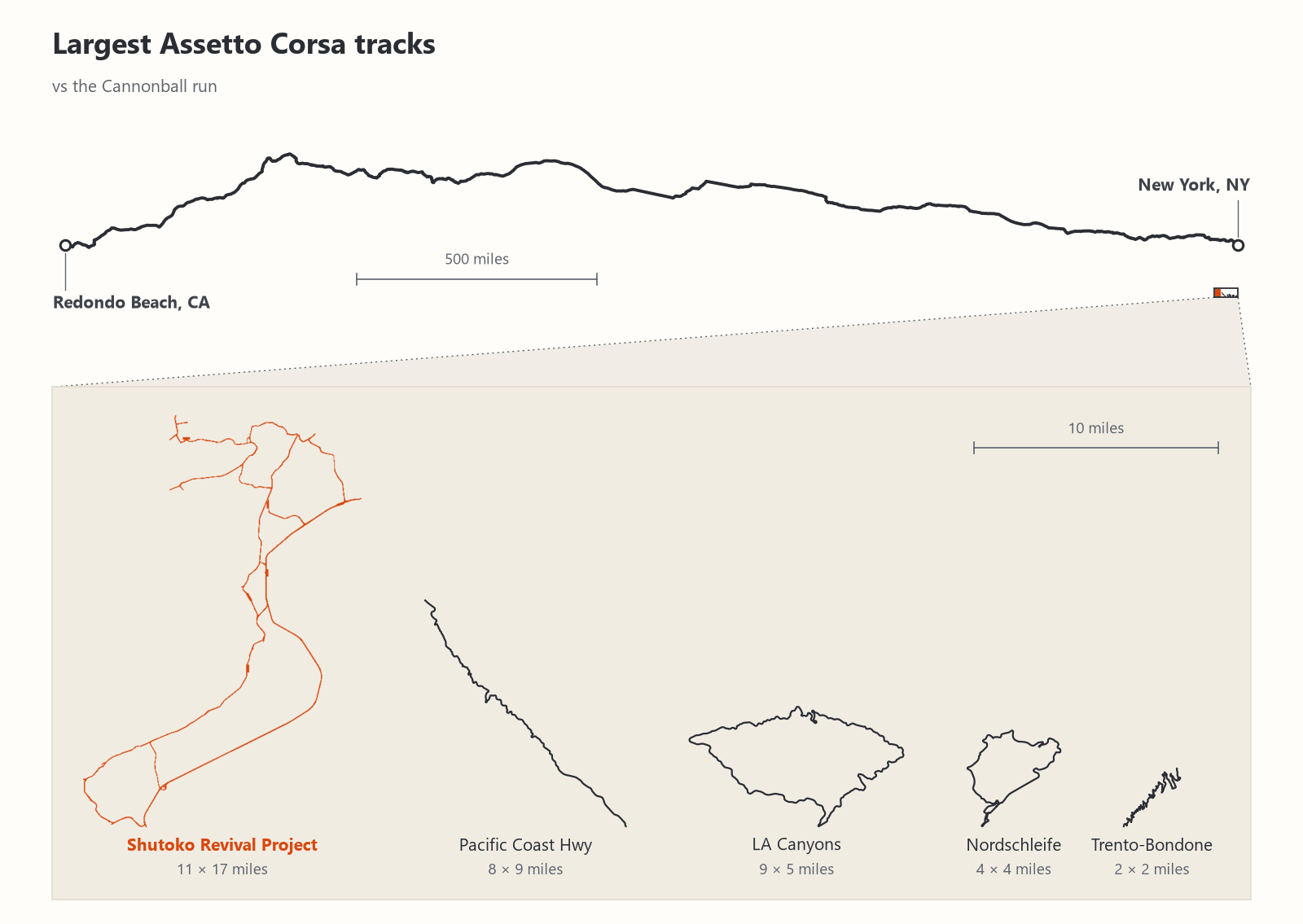 The biggest Assetto Corsa track, drawn to scale, next to the footprints of other big tracks.
The Shutoko Revival Project (SRP) is a community recreation of Tokyo’s expressways. It loads about 1.7 GB of meshes for a road network about 11 × 17 miles across. Even that scale is pushing the limits of what AC can do, and a track spanning 2,800 miles would need a novel approach. Nonetheless, AC (and its ubiquitous extension, Custom Shaders Patch) seemed like the natural place to start building. The first question: is it even possible?